
Creating Campus Change You Care About

March 14, 2026

Last week, we explored how anger can be a signal to listen to. Anger shows you what matters. It highlights misalignment, injustice, and unmet needs.


This week, the question becomes:
What do you do with that awareness?


Spring is the season of action, growth, and alignment. It is where frustration turns into movement and where empowerment begins to bring about intentional, sustainable change.


Campus change can start with choosing one cause you genuinely care about and showing up in ways that are realistic for your life.

Why Sustainable Activism Matters

Many students feel pressure to care about everything and to fix it all at once. That pressure often leads to burnout, guilt, or disengagement.


Sustainable activism looks different. It asks:

  • What issue consistently gets my attention?
  • What feels personal, not performative?
  • What can I contribute without exhausting myself?


Change requires consistency, care, and alignment.


From Frustration to Focus: Choosing a Cause

Think back to what you identified last week as something that regularly frustrates you on campus. That frustration is your clue.


Here are common areas where students often feel anger and how those feelings can point to meaningful causes:


Mental Health & Wellbeing

If you feel frustrated by:

  • Long wait times for counseling
  • Burnout culture
  • Academic pressure without support


You might get involved with:

  • Peer mental health advocacy groups
  • Student wellbeing committees
  • Suicide prevention or stress-awareness initiatives
  • Campus mental health awareness campaigns


Equity, Inclusion, & Belonging

If you feel anger around:

  • Lack of representation
  • Discrimination or bias
  • Feeling unheard or marginalized


You might support:

  • Cultural or identity-based student organizations
  • Diversity councils or advisory boards
  • Inclusion-focused programming
  • Advocacy for policy or curriculum change


Environmental & Sustainability Issues

If you feel frustrated by:

  • Waste on campus
  • Climate inaction
  • Unsustainable practices


You could join:

  • Campus sustainability clubs
  • Recycling or composting initiatives
  • Environmental awareness campaigns
  • Advocacy for greener campus policies


Financial & Academic Fairness

If you feel anger about:

  • Rising costs
  • Hidden fees
  • Unpaid internships
  • Academic policies that disadvantage students


You might engage with:

  • Student government
  • Financial advocacy groups
  • Academic policy review committees
  • Student advisory boards


Community Engagement & Service

If you feel frustrated by:

  • Disconnection from the surrounding community
  • Social inequality beyond campus


You could participate in:

  • Volunteer programs
  • Community service-learning projects
  • Mutual aid efforts
  • Local nonprofit partnerships

What Activism Can Actually Look Like (It’s Not One-Size-Fits-All)

Activism does not only mean protests or public speaking. It can look like:


  • Attending meetings and listening
  • Writing feedback or proposals
  • Helping organize events
  • Managing social media or communications
  • Supporting logistics behind the scenes
  • Having thoughtful conversations
  • Voting in student elections
  • Mentoring or peer support


Introverted, reflective, and analytical students are just as essential as outspoken leaders.


Staying Engaged Without Burning Out

Sustainable change requires sustainability … for you!


Here are ways to stay engaged without losing yourself:

  • Choose one or two commitments, not five
  • Set boundaries around time and energy
  • Work in community, not isolation
  • Rest without guilt
  • Let progress be imperfect


Burnout does not help causes succeed. Healthy advocates last longer!


Reflection: Aligning Action with Values

Before you commit to joining a cause, ask yourself:


  • Does this cause align with my values?
  • Would I feel energized or constantly depleted by doing this work?
  • Is this something I care about even when no one is watching?
  • What role within this cause fits my strengths right now?


It’s okay to be a little picky about how and where you invest your energy. Take the time to make sure something is a good fit before you commit.


Change Starts Closer Than You Think

The frustration you feel is not a flaw.


And you do not need a massive platform to create change.


This spring, let your anger guide you toward causes that matter and let your actions be shaped by care.


Change happens when students decide that their voice, time, and presence matter. And it often begins with one small step towards making their campus a better place. So, go take that step. We’ll be here cheering you on! 

By Beth Berger March 28, 2026
What is the Enactus U.S. Expo?
March 21, 2026
By this point in the spring semester, learning might be feeling a bit differently than it did back in January. Maybe the novelty has worn off. Maybe expectations feel more daunting. Maybe deadlines feel like they’re whacking you in the face at a fast and furious pace. Even students who enjoy learning can notice themselves shifting into a more transactional mindset around this time in the semester. You might find yourself only focusing on what is required rather than what is interesting. If that is you, we see you and this is our gentle reminder that now is the moment when intellectual wellbeing starts to matter most.

March 7, 2026
Anger often gets a bad reputation. We are taught to suppress it, minimize it, or feel ashamed when it shows up, especially in academic or professional environments. But anger can be used as useful information. Let us explain… As we move into spring, the season of action, growth, and alignment , we shift from quiet reflection to forward movement. And the emotion guiding us now is anger. Not explosive rage, but the deep frustration that rises when something feels unfair, misaligned, or broken. Here is the reframe that we invite you to consider this season:  Whatever frustrates you most is often the clearest clue to what needs your voice.

February 21, 2026
Your environment shapes how you feel more than you might realize. The space where you sleep, study, and unwind is not just a backdrop to your life; it is an active participant in your wellbeing. In winter especially, when days are shorter and stress tends to build, your physical environment can either help regulate your nervous system or quietly drain your energy. This week’s invitation is simple:  What would it look like to make your space feel like a sanctuary instead of just a place you crash? You do not need a big budget, perfect décor, or a lot of square footage. Just intention.

February 14, 2026
Valentine’s Day is usually framed around how we show up for other people like romantic partners, friends, family. It is filled with messages about giving more, doing more, being more. But what if we took the opportunity today to ask a quieter, more important question: How do you treat yourself when no one else is watching? This winter, as we continue exploring the emotional arc of fear → reflection → clarity , self-compassion asks us to pause and look inward. Because burnout, perfectionism, and chronic self-criticism rarely come from a lack of effort. They start with misplaced expectations and a belief that you are only worthy when you are improving.
By Beth Berger February 12, 2026
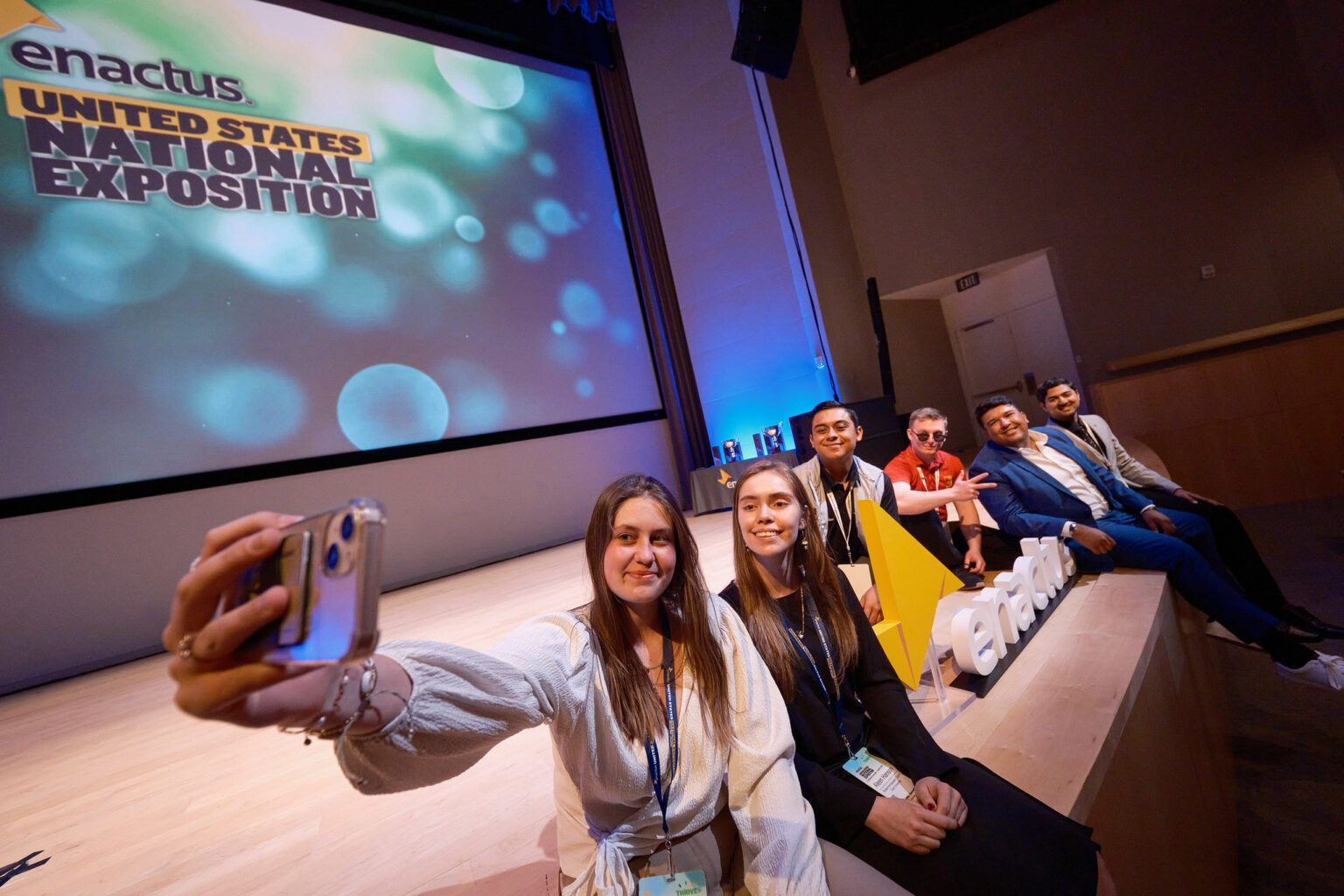
A conversation with Mikena Manspeaker, Acting Country Leader for Enactus United States

February 7, 2026
Money stress is one of the most common (and least talked about!) sources of anxiety for college students. It shows up quietly: a tight feeling when you check your bank account, avoiding emails about tuition or fees, stress when friends suggest plans you can’t afford, or guilt over spending even small amounts. If this sounds familiar, you are not alone! This winter, as we continue moving through the emotional arc of fear → reflection → clarity , financial wellbeing invites an honest question: What am I afraid of when it comes to money?  Because beneath budgeting apps and bank balances, money is deeply emotional.
January 24, 2026
Most students plan their semester around one thing: deadlines. Assignments. Exam dates. Work shifts. Lab schedules. Club meetings. Everything gets built around what has to happen. But what if you designed your semester around when you function best , not just when things are due? This is the heart of wellbeing-centered planning: recognizing that your energy is not the same at every hour of every day, and that working with your natural rhythms leads to better performance, better mood, and less burnout. This winter’s theme of r est, evaluation, and courage encourages you to pause, look inward, and ask: What do I need to thrive this semester? Not just to get through it, but to feel steady, capable, and clear.  Designing your semester around your energy peaks is one of the smartest ways to begin that shift!

January 17, 2026
When you think about fear, you might picture danger, stress, or something you want to avoid. But what if fear isn’t the enemy? What if fear is information that’s pointing you toward something meaningful? This winter at the Lifelong Wellbeing Foundation, we’re exploring the emotional arc of fear → reflection → clarity . Fear often signals the exact place where growth wants to happen. Instead of treating fear as a stop sign, we can begin to treat it as a compass.
January 10, 2026
Rest Is Not a Break from Your Work Michael J. Breus, Ph.D., widely known by his moniker The Sleep Doctor , has spent decades studying sleep, circadian rhythms, and how rest affects human performance. His work emphasizes a crucial point: Your brain is not designed to function at full speed without periods of intentional recovery. According to Breus, sleep and rest:  Strengthen memory and learning Improve focus and decision-making Regulate emotions Boost immunity Support creativity and problem-solving In other words, everything you want to do well in college, from exams to internships to relationships, begins with how well you rest. In his Psychology Today column Sleep Newzzz , Breus often warns that chronic sleep loss can slowly dismantle your ability to perform. And even short-term sleep deprivation (think: finals week!) affects reaction time, mood, comprehension, and impulse control. Why Students Fear Rest If rest is so beneficial, why does it feel scary? Because rest requires trust that the world won’t collapse if you take an hour to sleep, trust that your worth isn’t measured by how tired you are, and trust that your brain can actually do more with less pressure. Students often carry silent fears, including: “If I take a break, I’ll never get back on track.” “Everyone else is working nonstop, so I should too.” “Rest means I’m not trying hard enough.” “If I slow down, I’ll fall behind.” But these are misunderstandings of how human performance actually works. The brain is a biological system, not a machine. It needs cycles of energy expenditure and cycles of energy restoration. Winter is the perfect reminder to shift your mindset. Nature rests, pauses, and prepares. You can, too.
Show More