
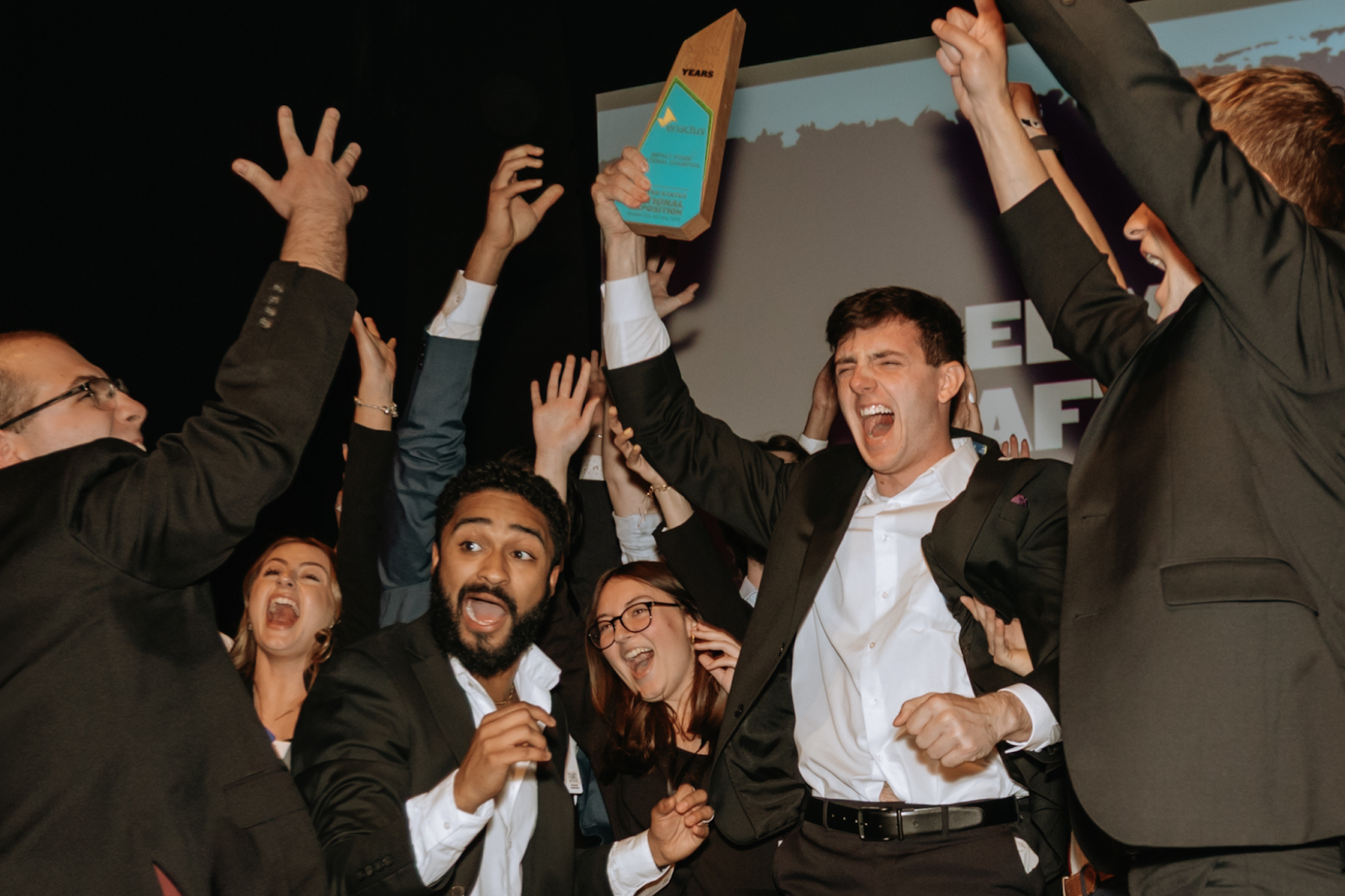
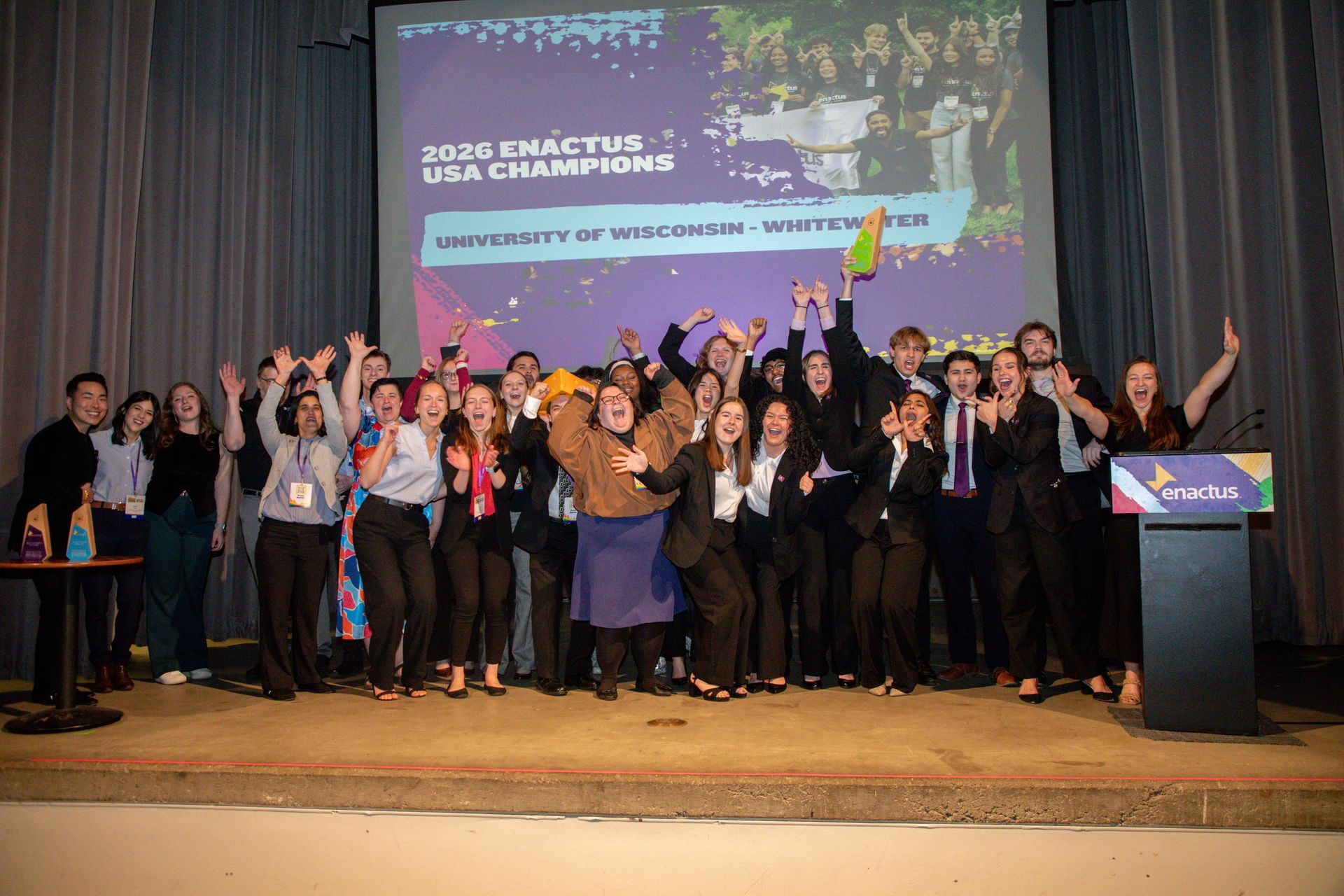
Inside the Enactus U.S. Expo (and How to Get Involved)

Beth Berger • March 28, 2026

Ever wished you could revisit the ambitious, purpose-driven, a little nervous, and fully alive energy you felt when you first stepped on a college campus?


This spring, Enactus United States is bringing students, educators, and community leaders together in Denver for a three-day experience that is part networking, part learning lab, and part high-stakes storytelling on a national stage. And the best part?


You do not have to be a college student to be part of it.


When I asked Mikena Manspeaker (Director and Acting Country Leader for Enactus United States) how professionals and local community members can plug in, her answer was simple: we need you.


Not as donors or spectators from afar, but real humans in the room who can share perspective, ask smart questions, and help students strengthen ideas that are already changing communities.


Here is what the Expo is, why it matters, and the easiest ways to get involved if you are anywhere near Denver.

What is the Enactus U.S. Expo?

The Enactus U.S. National Exposition is a three-day event that brings together:


  • College student teams (from across the U.S.)
  • Faculty advisors and campus leaders
  • Enactus staff
  • Business and community professionals
  • Judges, mentors, and social impact leaders


Mikena described it as “a three-day networking competition interaction” with a mix of excursion activities, workshops, and ceremonies designed to help students connect, settle in, and then compete.


Day one has more space to meet people, explore Denver, and ease nerves.


Days two and three are where it gets intense in the best way.


“Day two and day three are competitions out the wazoo,” Mikena said, laughing, “and workshops for a little bit further development and learning.”

What Students Are Competing For

Students spend the year building social impact ventures and projects, then they bring that work to Expo in a format that has to be clear, measurable, and compelling.


That means students are not only doing meaningful work. They are learning how to communicate impact to a room of professionals who have never heard their project before.


At Expo, there are three different types of competition, with multiple levels and rounds depending on participation. Mikena described a progression from pitch-level to more advanced categories, all the way to the Impact Stage which is the most developed projects with the strongest proof of results.

“That track is the one that will be crowning our national champion,” she said.


This is also the track that advances to the global stage. From Denver, Enactus U.S. will crown one national champion, and that team will go on to compete internationally.

How Professionals Can Get Involved in Judging

Enactus welcomes local professionals to judge across competitions, and you do not need to be a social impact expert to contribute.


“We ask for some professional experience,” Mikena shared. “Social impact or entrepreneurship experience is a huge plus but not required. We will provide training on site.”


Judges participate in opening rounds, offering feedback on project strength, sustainability, and clarity of impact. Enactus provides guidelines and structure while your job is to bring your lived experience and your ability to see what students cannot see yet.


Mikena put it beautifully: even a few years of experience beyond college can help students imagine how their work could live in the world. That kind of insight can change everything for a student founder.


CLICK HERE TO REGISTER TO JUDGE

New This Year: The Impact Exchange

This year, Enactus is piloting something new and Denver is the perfect city for it.


It is called the Impact Exchange, and Mikena described it as “half maker’s market, half social impact hub.”


This is Enactus intentionally creating a space where students can:

  • Have real career conversations with people working in social impact
  • Learn what mission-aligned careers can look like (in many forms)
  • Connect with nonprofits, socially-driven companies, and impact-focused professionals
  • Support local Denver artisans and small businesses through a maker’s market experience


Mikena’s vision is that the Impact Exchange helps students expand their sense of what is possible.

She shared that when she graduated college, she only had eyes for corporate finance. She wishes she had been exposed earlier to the many ways someone can build a career in impact, including finance, entrepreneurship, nonprofit work, or something hybrid.


“There’s so many different shapes and sizes of it,” she said. “We’re really trying to creat exposure to what a career in social impact can look like.”


There are three main ways to participate in the Impact Exchange:

  1. Local Denver social impact businesses who want to talk with students
  2. National organizations based in Denver that want to share opportunities
  3. Makers/vendors who want to sell products and be part of the market

A Special Invitation to Students in Colorado

This year’s Expo is also intentionally a recruitment moment for students in Colorado.


Enactus does not currently have teams in Colorado, and bringing Expo to Denver is part of getting the name on the ground so students can see what Enactus is and imagine it on their campus.


Mikena’s message to students was clear: “Even if you have never heard of Enactus before, this event is 100% for you to come check out.”


If you are a student anywhere near Denver, this is a chance to:


  • Watch teams pitch real ventures
  • Meet other students doing this work
  • Learn what it looks like to start or join a team
  • Talk with faculty and Enactus staff about bringing it to your campus

How to Take One Small Step

If you are reading this and thinking, “This feels like something I want to be around,” here are three ways to get involved:


  1. Judge. Bring your experience into the room and help student teams sharpen their work.
  2. Join the Impact Exchange. Table as an organization, show up as a social impact professional, or participate as a maker/vendor.
  3. Come observe Saturday afternoon. Watch the final four Impact Stage teams present and stay for the national champion ceremony!


Enactus is building something powerful and it thrives when the broader community steps in, not just to cheer from afar, but to become an active participant.


Denver, we would love to see you there.

March 21, 2026
By this point in the spring semester, learning might be feeling a bit differently than it did back in January. Maybe the novelty has worn off. Maybe expectations feel more daunting. Maybe deadlines feel like they’re whacking you in the face at a fast and furious pace. Even students who enjoy learning can notice themselves shifting into a more transactional mindset around this time in the semester. You might find yourself only focusing on what is required rather than what is interesting. If that is you, we see you and this is our gentle reminder that now is the moment when intellectual wellbeing starts to matter most.
March 14, 2026
Last week, we explored how anger can be a signal to listen to. Anger shows you what matters. It highlights misalignment, injustice, and unmet needs. This week, the question becomes: What do you do with that awareness? Spring is the season of action, growth, and alignment . It is where frustration turns into movement and where empowerment begins to bring about intentional, sustainable change. Campus change can start with choosing one cause you genuinely care about and showing up in ways that are realistic for your life.

March 7, 2026
Anger often gets a bad reputation. We are taught to suppress it, minimize it, or feel ashamed when it shows up, especially in academic or professional environments. But anger can be used as useful information. Let us explain… As we move into spring, the season of action, growth, and alignment , we shift from quiet reflection to forward movement. And the emotion guiding us now is anger. Not explosive rage, but the deep frustration that rises when something feels unfair, misaligned, or broken. Here is the reframe that we invite you to consider this season:  Whatever frustrates you most is often the clearest clue to what needs your voice.

February 21, 2026
Your environment shapes how you feel more than you might realize. The space where you sleep, study, and unwind is not just a backdrop to your life; it is an active participant in your wellbeing. In winter especially, when days are shorter and stress tends to build, your physical environment can either help regulate your nervous system or quietly drain your energy. This week’s invitation is simple:  What would it look like to make your space feel like a sanctuary instead of just a place you crash? You do not need a big budget, perfect décor, or a lot of square footage. Just intention.

February 14, 2026
Valentine’s Day is usually framed around how we show up for other people like romantic partners, friends, family. It is filled with messages about giving more, doing more, being more. But what if we took the opportunity today to ask a quieter, more important question: How do you treat yourself when no one else is watching? This winter, as we continue exploring the emotional arc of fear → reflection → clarity , self-compassion asks us to pause and look inward. Because burnout, perfectionism, and chronic self-criticism rarely come from a lack of effort. They start with misplaced expectations and a belief that you are only worthy when you are improving.
By Beth Berger February 12, 2026
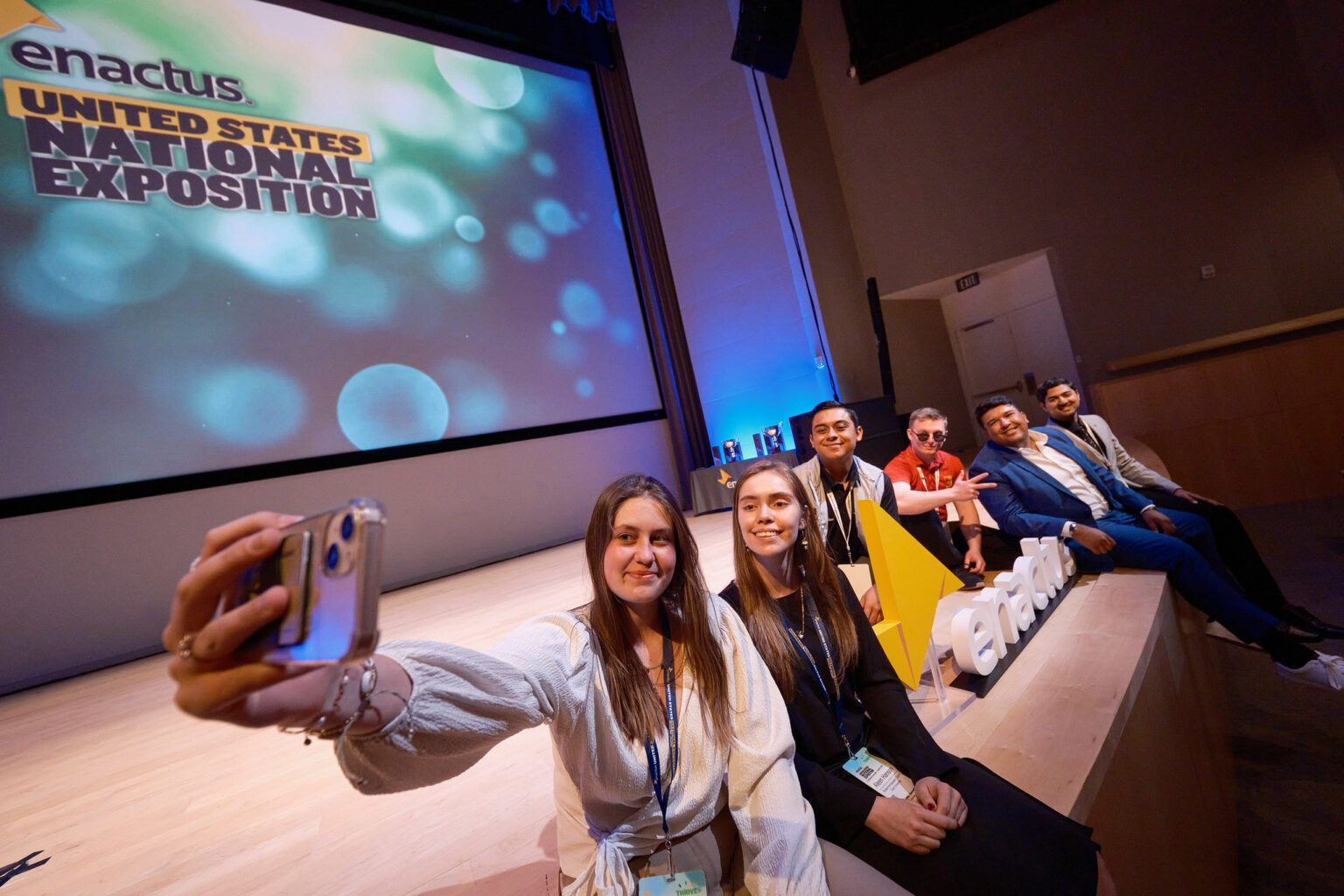
A conversation with Mikena Manspeaker, Acting Country Leader for Enactus United States

February 7, 2026
Money stress is one of the most common (and least talked about!) sources of anxiety for college students. It shows up quietly: a tight feeling when you check your bank account, avoiding emails about tuition or fees, stress when friends suggest plans you can’t afford, or guilt over spending even small amounts. If this sounds familiar, you are not alone! This winter, as we continue moving through the emotional arc of fear → reflection → clarity , financial wellbeing invites an honest question: What am I afraid of when it comes to money?  Because beneath budgeting apps and bank balances, money is deeply emotional.
January 24, 2026
Most students plan their semester around one thing: deadlines. Assignments. Exam dates. Work shifts. Lab schedules. Club meetings. Everything gets built around what has to happen. But what if you designed your semester around when you function best , not just when things are due? This is the heart of wellbeing-centered planning: recognizing that your energy is not the same at every hour of every day, and that working with your natural rhythms leads to better performance, better mood, and less burnout. This winter’s theme of r est, evaluation, and courage encourages you to pause, look inward, and ask: What do I need to thrive this semester? Not just to get through it, but to feel steady, capable, and clear.  Designing your semester around your energy peaks is one of the smartest ways to begin that shift!

January 17, 2026
When you think about fear, you might picture danger, stress, or something you want to avoid. But what if fear isn’t the enemy? What if fear is information that’s pointing you toward something meaningful? This winter at the Lifelong Wellbeing Foundation, we’re exploring the emotional arc of fear → reflection → clarity . Fear often signals the exact place where growth wants to happen. Instead of treating fear as a stop sign, we can begin to treat it as a compass.
January 10, 2026
Rest Is Not a Break from Your Work Michael J. Breus, Ph.D., widely known by his moniker The Sleep Doctor , has spent decades studying sleep, circadian rhythms, and how rest affects human performance. His work emphasizes a crucial point: Your brain is not designed to function at full speed without periods of intentional recovery. According to Breus, sleep and rest:  Strengthen memory and learning Improve focus and decision-making Regulate emotions Boost immunity Support creativity and problem-solving In other words, everything you want to do well in college, from exams to internships to relationships, begins with how well you rest. In his Psychology Today column Sleep Newzzz , Breus often warns that chronic sleep loss can slowly dismantle your ability to perform. And even short-term sleep deprivation (think: finals week!) affects reaction time, mood, comprehension, and impulse control. Why Students Fear Rest If rest is so beneficial, why does it feel scary? Because rest requires trust that the world won’t collapse if you take an hour to sleep, trust that your worth isn’t measured by how tired you are, and trust that your brain can actually do more with less pressure. Students often carry silent fears, including: “If I take a break, I’ll never get back on track.” “Everyone else is working nonstop, so I should too.” “Rest means I’m not trying hard enough.” “If I slow down, I’ll fall behind.” But these are misunderstandings of how human performance actually works. The brain is a biological system, not a machine. It needs cycles of energy expenditure and cycles of energy restoration. Winter is the perfect reminder to shift your mindset. Nature rests, pauses, and prepares. You can, too.
Show More