
Enactus Is the Coolest Thing Nobody Knows About

Beth Berger • February 12, 2026

A conversation with Mikena Manspeaker, Acting Country Leader for Enactus United States

I have a soft spot for anything that feels like competitive speech and debate. In college, the high-energy teamwork, the storytelling, and the “I have less than ten minutes to change your mind” adrenaline was what fueled me.


So when someone first told me about Enactus, I had that immediate reaction of: Wait… how have I never heard of this?


Turns out, I’m not alone.


“I think Enactus is the coolest thing that nobody knows about,” Mikena Manspeaker laughed when we spoke. “But I’m biased.”


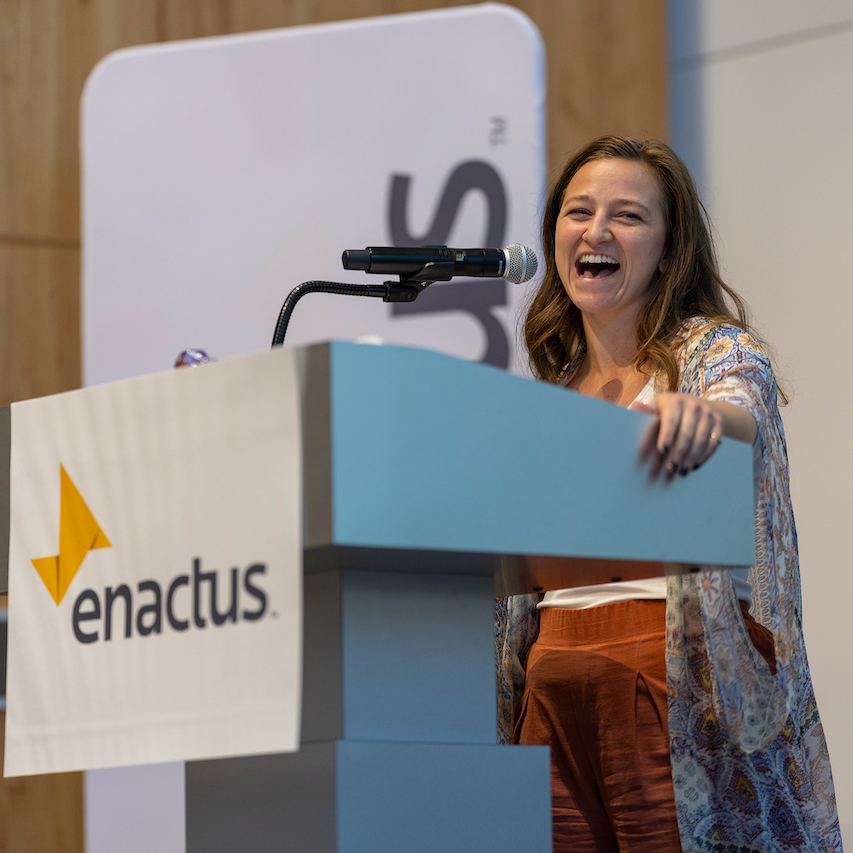
Mikena is the director and acting country leader for Enactus United States, and she’s also a proud Enactus alum. Now, she’s helping rebuild and strengthen Enactus in the U.S. so more students can find what she found: a place to channel their energy into something meaningful.


And if you’re someone who loves big ideas and student-led impact? You’re going to want to keep reading.


What Is Enactus?

If you’ve never heard of Enactus before, here’s the simple version:


Enactus is a social impact organization that exists on college campuses across the United States. Students form teams, then build projects and ventures that address real needs through sustainable, long-term solutions.


“We help college students pursue social ventures,” Mikena explained. “That can be in the form of a nonprofit or a social venture for profit.”


But the key phrase she returned to again and again was sustainable solutions.


“Our goal… is to help students empower others to find sustainable solutions for themselves as opposed to one-time relief efforts,” she said. “We’re looking for projects that develop long-term sustainability and make a lifelong changing impact.”


That mission is why Enactus isn’t just another feel-good extracurricular. It’s a launchpad.

Where Enactus Fits Globally

Enactus has deep roots in the U.S. It started here more than 50 years ago, originally under the name Students in Free Enterprise, before rebranding.


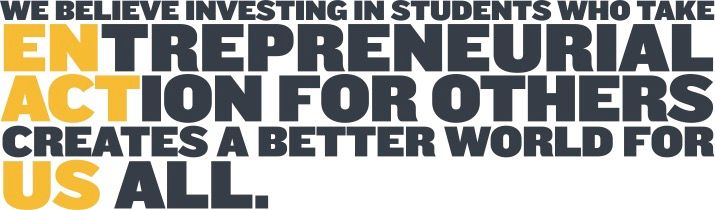
The word “Enactus” is a mash-up: Entrepreneurial Action Us.


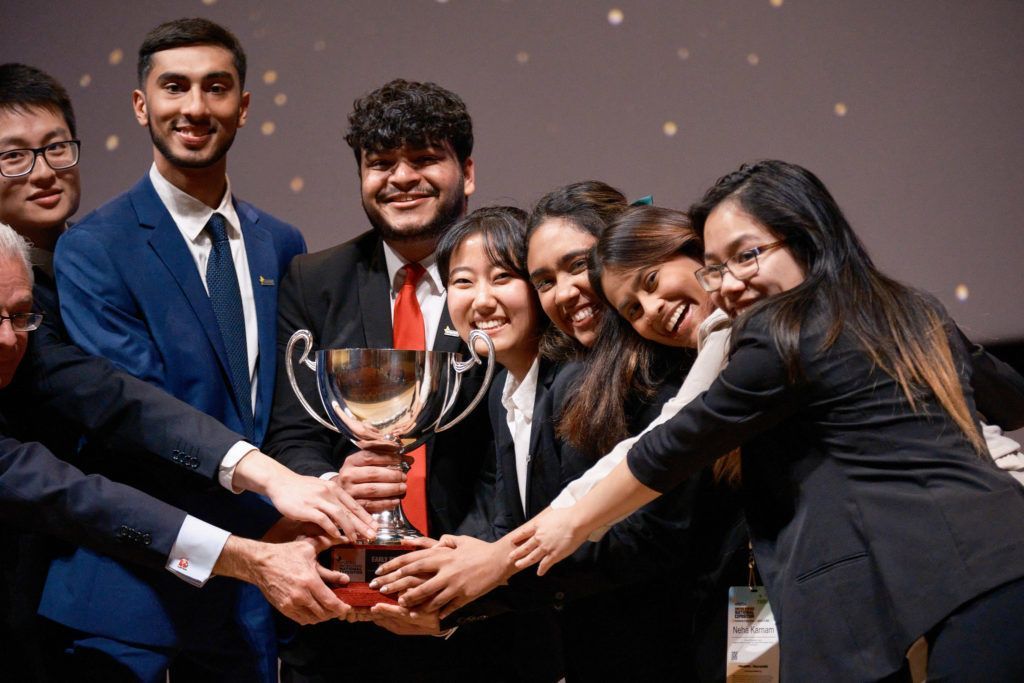
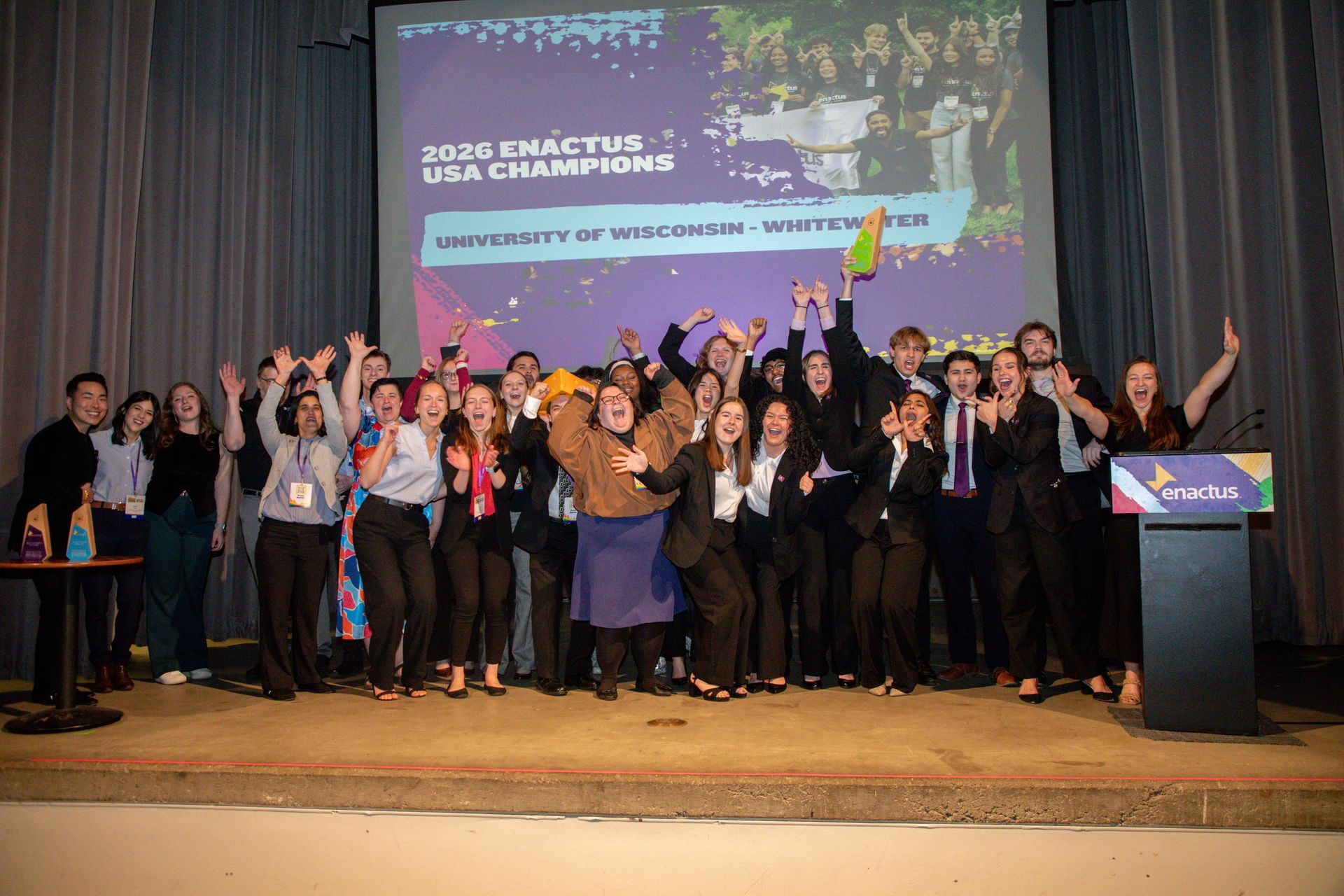
Today, Enactus exists in 33 countries worldwide, and each country operates as its own entity. The connective tissue is the shared program model and the annual competition cycle: each country holds its own national exposition, then sends one national champion to compete globally.


“It’s a big family gathering when we come back together for the global competition,” Mikena said.


So while teams and national organizations operate locally day-to-day, students are part of something much bigger: a global ecosystem of young people building solutions with an entrepreneurial mindset.


What Students Actually Do in Enactus

Enactus follows the rhythm of the academic year, and Mikena walked me through what the typical cycle looks like.


In August and September, teams recruit. They bring in underclassmen, build momentum, and expand their capacity. Some teams recruit broadly for fresh ideas; others recruit for specific roles within existing projects.


In the fall, the work gets more structured: needs assessment workshops, project ideation, revisiting ongoing projects, and establishing priorities for the year.


Then, heading into late winter and spring, the focus shifts toward preparing for Expo with:

  • Impact measurement (and tracking it accurately)
  • Pre-audit processes (rigorous reporting standards)
  • Storytelling (making the work understandable to someone hearing it for the first time)


And yes, if you’re a natural presenter, Enactus will absolutely put you to work.


Mikena told me she recently spoke with an Enactus alum who remembered being recruited directly out of a public speaking class.


“They need the good presenters, the storytellers,” she said. “People that just dial in when they’re in front of people and on a stage.”


If that’s you (or the student you’re thinking of right now), Enactus is a perfect outlet.


How Students Choose Their Projects

Enactus teams are encouraged to start with local needs.


There’s a temptation to want to create an “international project.” Sometimes that makes sense, especially for international students with personal ties. But Mikena emphasized that the U.S. is full of meaningful challenges too, and local work often has the strongest foundation for sustainable impact.


Teams explore needs through exercises and workshops, then develop ideas based on what’s most relevant in their region.


In disaster-impacted areas, teams have worked on recovery and long-term business sustainability.


Coastal teams often tackle water cleanliness, ocean-related challenges, or reuse of waste collected from waterways.


City-based teams may focus on basic needs access: education, financial resources, and community support systems.


And because Enactus teams exist in everything from rural communities to major cities, the range is massive.


The Enactus model is high-guidance without being restrictive: big parameters, clear expectations for sustainability and impact, and then support and mentorship tailored to the project.

Enactus and Student Wellbeing

When Mikena talks about Enactus, she talks about projects. But when she talks about her experience as a student, she talks about people.


She met one of her best friends through Enactus. She formed bonds that still show up years later as an instant connection with other alumni.


“It’s just such an easy touch point,” she said. “People hear the word Enactus and their ears perk up.”

But it wasn’t only friendships.


It was also the intensity of working toward something that required effort, teamwork, and real performance under pressure.


“Organizing transportation to get to a national conference… working on a seven-minute speech that you have to memorize… stepping into a competition room… it was just this big experience,” she said. “That experience forged bonds that are hard to mimic.”


And it created something many students are craving right now: a guiding light.


“Enactus gives students that outlet of like-minded individuals and that sense of community,” Mikena said. “It gives a guiding light; it gives a sense of purpose.”


She also named the reality: Enactus can be demanding, especially for students on the presentation team, rehearsing multiple nights per week in the midst of other commitments and studying for finals.

But she sees that as part of the point.


“It’s setting our students apart as being go-getters,” she said. “The ones willing to put in the extra hours and hard work… and I think that’s reflected in their interviews when they’re going out to land internships or jobs.”


The impact isn’t only in the communities served. The impact is in the students themselves.


Who Joins Enactus?

Mikena described Enactus students in three broad buckets:

1.       Students who want to make the world better, but don’t know where to put that energy yet.

2.       Students who already have an idea and need an outlet and support to build it.

3.       Students who know it will be meaningful (and yes, look good on a resume), and want to contribute at a level that fits their season of life.


Enactus makes room for all three.


Teams often operate like a business, with different leadership roles and ways to contribute so students can scale their involvement up or down.


That flexibility is important to a college student population.


Mikena also shared that especially for this generation: students want mission-aligned work. They want to see their impact. They don’t want to be a cog in a machine.


Enactus gives students a framework to act on that desire.


Why LWF + Enactus Makes Sense

At Lifelong Wellbeing Foundation, we support college students across the eight dimensions of wellbeing.


Enactus naturally supports many of those dimensions through:

  • Community and belonging
  • Skill-building and career confidence
  • Meaning and purpose
  • Real-world experience with leadership and entrepreneurship
  • Exposure to sustainable development work


That’s why this partnership feels aligned. We share the belief that students thrive when they have purpose, connection, and a place to put their energy.


And we’re genuinely excited to be alongside Enactus at the U.S. Expo this year.


How Students Can Get Involved

If you’re a student reading this and thinking, Okay… this sounds like my kind of thing, here are your next steps:


If your campus already has an Enactus team

Join it. Seriously. Go to a meeting. Meet the people. Ask what projects they’re working on.


If your campus doesn’t have a team

Reach out to Enactus U.S. by sending an email to usateam@enactus.org and ask about starting one.


If you have an idea and want to compete right away

Enactus U.S. also offers a track designed specifically for students with early-stage ideas through the Social Venture Challenge (SVC), run by the Resolution Project. Learn more here and apply here.


What Gives Mikena Hope

When Mikena talks about Enactus, she doesn’t sound like someone doing a job. She sounds like someone protecting something precious.


At one point, she told me Enactus U.S. faced a gutting moment in 2023 when it looked like it was shutting down. She remembered thinking the world was going to miss out on something special.

Now, she’s part of the reason it didn’t disappear.


If you’ve ever felt overwhelmed by the state of the world, or wished students had more places to channel their drive into real change, this is the kind of story that makes you exhale.

Enactus is still here.


And it’s growing. One student, one team, one sustainable project at a time.

Want to explore Enactus?

Students: Check out the Social Venture Challenge (SVC) if you have an idea and want to compete this year.


Students + faculty + campus leaders: Explore the website and email usateam@enactus.org to get connected with Mikena and her team.


Everyone else: Stay tuned for our next post, which will share ways to plug into the Enactus U.S. Expo in Denver.


February 7, 2026
Money stress is one of the most common (and least talked about!) sources of anxiety for college students. It shows up quietly: a tight feeling when you check your bank account, avoiding emails about tuition or fees, stress when friends suggest plans you can’t afford, or guilt over spending even small amounts. If this sounds familiar, you are not alone! This winter, as we continue moving through the emotional arc of fear → reflection → clarity , financial wellbeing invites an honest question: What am I afraid of when it comes to money?  Because beneath budgeting apps and bank balances, money is deeply emotional.
January 24, 2026
Most students plan their semester around one thing: deadlines. Assignments. Exam dates. Work shifts. Lab schedules. Club meetings. Everything gets built around what has to happen. But what if you designed your semester around when you function best , not just when things are due? This is the heart of wellbeing-centered planning: recognizing that your energy is not the same at every hour of every day, and that working with your natural rhythms leads to better performance, better mood, and less burnout. This winter’s theme of r est, evaluation, and courage encourages you to pause, look inward, and ask: What do I need to thrive this semester? Not just to get through it, but to feel steady, capable, and clear.  Designing your semester around your energy peaks is one of the smartest ways to begin that shift!

January 17, 2026
When you think about fear, you might picture danger, stress, or something you want to avoid. But what if fear isn’t the enemy? What if fear is information that’s pointing you toward something meaningful? This winter at the Lifelong Wellbeing Foundation, we’re exploring the emotional arc of fear → reflection → clarity . Fear often signals the exact place where growth wants to happen. Instead of treating fear as a stop sign, we can begin to treat it as a compass.
January 10, 2026
Rest Is Not a Break from Your Work Michael J. Breus, Ph.D., widely known by his moniker The Sleep Doctor , has spent decades studying sleep, circadian rhythms, and how rest affects human performance. His work emphasizes a crucial point: Your brain is not designed to function at full speed without periods of intentional recovery. According to Breus, sleep and rest:  Strengthen memory and learning Improve focus and decision-making Regulate emotions Boost immunity Support creativity and problem-solving In other words, everything you want to do well in college, from exams to internships to relationships, begins with how well you rest. In his Psychology Today column Sleep Newzzz , Breus often warns that chronic sleep loss can slowly dismantle your ability to perform. And even short-term sleep deprivation (think: finals week!) affects reaction time, mood, comprehension, and impulse control. Why Students Fear Rest If rest is so beneficial, why does it feel scary? Because rest requires trust that the world won’t collapse if you take an hour to sleep, trust that your worth isn’t measured by how tired you are, and trust that your brain can actually do more with less pressure. Students often carry silent fears, including: “If I take a break, I’ll never get back on track.” “Everyone else is working nonstop, so I should too.” “Rest means I’m not trying hard enough.” “If I slow down, I’ll fall behind.” But these are misunderstandings of how human performance actually works. The brain is a biological system, not a machine. It needs cycles of energy expenditure and cycles of energy restoration. Winter is the perfect reminder to shift your mindset. Nature rests, pauses, and prepares. You can, too.
January 3, 2026
The start of a new year always feels full of possibility. For college students especially, the beginning of January offers a clean slate before the semester ramps up. This is the in-between moment where you can breathe, reflect, and decide how you want to show up in the months ahead. At the Lifelong Wellbeing Foundation, we believe this pause is essential. Because a year of wellbeing doesn’t begin with resolutions, hustle, or pressure. It begins with awareness. This winter, our seasonal focus is rest, evaluation, and courage . Often our guiding emotion as we dive into a new semester is fear —not in the sense of danger, but in the sense of that subtle internal resistance that rises whenever we stand at the edge of something important. This is your invitation to acknowledge and harness that emotion. Fear often shows up when we’re about to grow. When we pause long enough to ask, “What am I actually afraid of here?” we often discover exactly where clarity is waiting.
December 30, 2025
What if you approached your college years not just as “get through it,” but as a designed life adventure? With the eight dimensions of wellbeing as your compass, you can build a “360-degree Wellbeing Plan” that guides the rest of your college journey. Here’s how… Step 1: Understand the Eight Dimensions Emotional – How you feel and how well you manage your emotions. Occupational – Your learning, work, growth in roles you value. Environmental – Your physical surroundings, campus, dorm, home, and nature. Physical – Movement, health, nutrition, rest. Mental – Cognitive stimulation, learning, mindfulness, curiosity. Social – Relationships, community, belonging. Financial – Money habits, budgeting, future financial health. Spiritual – Purpose, meaning, values, inner life. Step 2: Create Your 360-degree Wellbeing Plan Draw a large circle on paper (or digitally). Divide it into eight equal slices—one for each dimension. Label each slice with a dimension name. In each slice, write: One big dream you have for that dimension (for the rest of college). One small action you’ll commit to this semester to move toward that dream. Example: Physical: Big dream → “Complete a semester of intramural soccer and feel energetic.” Small action → “Attend one rec-center group fitness class each week.” Financial: Big dream → “Graduate with less than $5K in credit-card debt.” Small action → “Set aside $50/month and track spending with an app.” (And so on for each dimension.) Step 3: Review & Adjust At the end of each semester: Check your wheel: What progress did you make? What stalled? Adjust: Maybe your dream changed, maybe your action needs tweaking for the next semester. Use this as your compass rather than just reacting to whatever comes. Why This Works Holistic: Recognizes you’re not just “a student,” you’re a whole person across dimensions. Intentional : Choosing dreams rather than letting life choose them for you. Flexible : As you grow, your wheel evolves. Aligned : Builds your college years into a meaningful trajectory and not just semesters that blur together.  Your college years are a unique season and you don’t have to drift through them. With a plan for the new year that’s built around the eight dimensions of wellbeing, you can design your path, align your actions with your highest aspirations, and make the most of this chapter. Grab a poster-board, some colored pens, and craft your 360-degree plan this week. Let your dreams guide your next move.
December 23, 2025
How a 24-Year-Old Innovator Is Reimagining the Future of Mental Health Tools
December 16, 2025
More Health. More Life. More You.
December 9, 2025
1. Nutrition & Food as Medicine
December 2, 2025
Colleges and universities have always been more than classrooms. The entire campus becomes an ecosystem where students learn, grow, and discover who they are. But in recent years, higher education has faced a growing challenge: students are arriving on campus with more complex needs and higher stress levels than ever before. Conversations around wellness and wellbeing are essential. Wellness vs. Wellbeing: Why the Distinction Matters You’ve probably heard both terms used interchangeably, but they represent different, though connected, aspects of student health. Wellness is about the daily habits that maintain physical and emotional health like sleep, nutrition, exercise, and stress management. It’s the realm of fitness centers, mindfulness exercises, and campus health initiatives. Wellbeing , on the other hand, looks at the whole picture: not just what students do, but how they feel, function, and connect. It’s the realm of belonging, purpose, and the environment that supports (or hinders) a student’s ability to thrive. When wellbeing is strong, students show up to class more engaged, persist through challenges, and build the resilience to navigate college and beyond.
Show More