

Sponsor Spotlight: ZenBud

December 23, 2025

How a 24-Year-Old Innovator Is Reimagining the Future of Mental Health Tools

The Lifelong Wellbeing Foundation is honored to spotlight ZenBud, an emerging leader in neuroscience-driven mental health technology, and its founder, Jon Hacker, a young innovator with neurotech experience and a mission that aligns beautifully with our work.


ZenBud is built around a central question: What if we could help people shift out of constant fight-or-flight through effortless, science-backed technology?


For college students facing unprecedented levels of stress, overstimulation, and pressure, this question matters more than ever.


Meet Jon Hacker: A New Kind of Innovator for a New Generation

Few founders can say they’ve been working in their field for over a decade by age 24, but Jon can.


His journey started early, shaped by his own struggles with OCD and chronic fight-or-flight patterns when he was young. Instead of accepting his experience as fixed, he became fascinated by the nervous system, its potential, and the possibility that technology could help people feel differently.


“So much of lifelong health is built out of habits formed in childhood and young adulthood,” Jon shared. “I wanted the next generation to have tools I didn’t have.”


By age 11, he was experimenting with ways to stimulate different neurons in the body. Through middle school, high school, and into college, he kept building. He iterated on ideas, scrapped approaches that didn’t work, and pursued a vision long before he had a fully formed company.


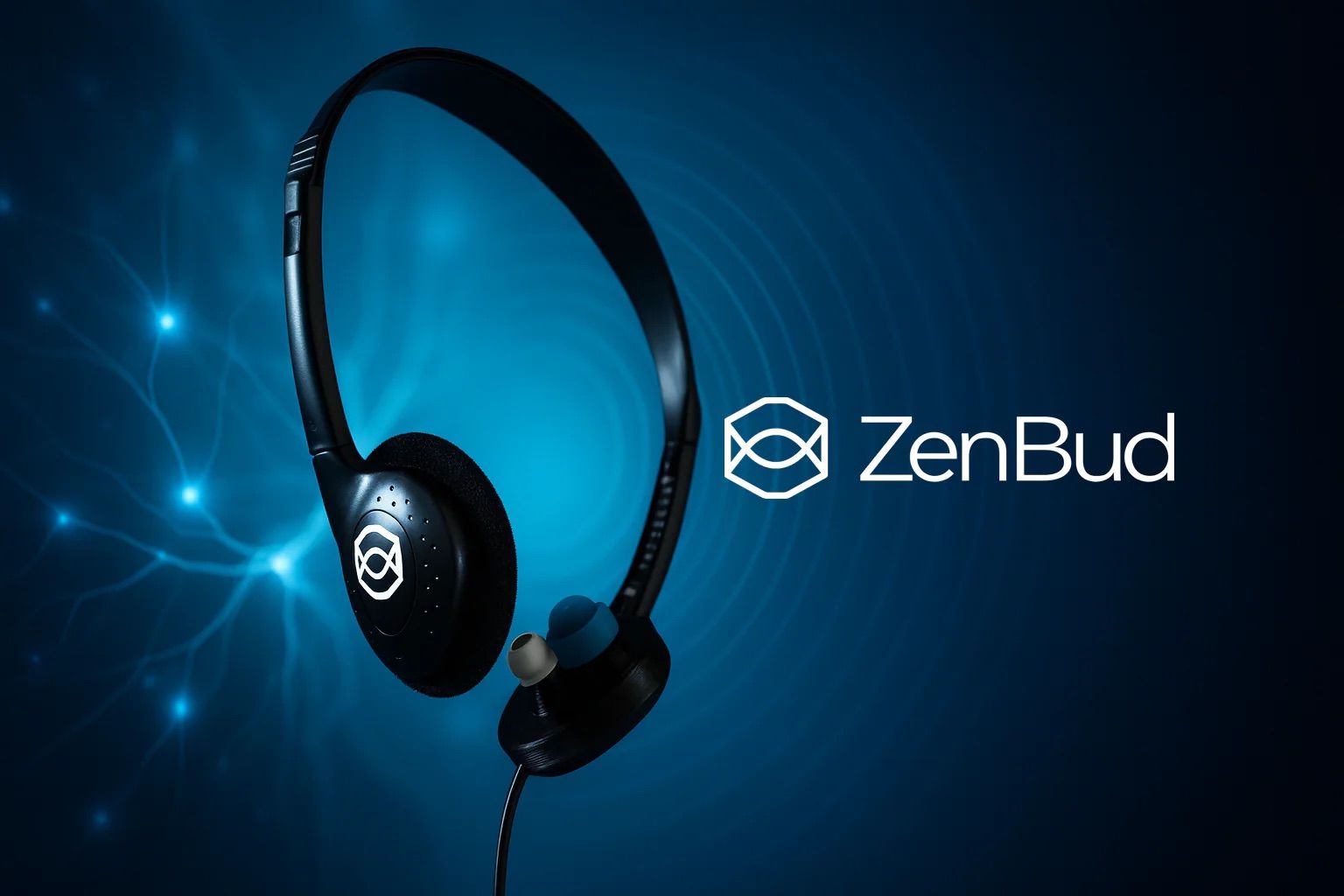
Today, that work lives inside NeurGear, the parent company Jon founded to advance scalable ultrasound neuromodulation technologies. ZenBud is its flagship brand and the first tool bringing this science directly to everyday users.


What ZenBud Does: A Breakthrough in Accessible Nervous System Regulation

ZenBud uses ultrasound vagus nerve stimulation to help users shift out of “fight-or-flight” and into a parasympathetic “rest-and-digest” state.


Jon explains it through a metaphor:


“Your body has a gas pedal and a brake pedal. Some people have the gas pedal stuck to the floor. ZenBud helps them rediscover the brake.”


Where many wellness tools require commitment, discipline, or long routines, ZenBud is intentionally different: You put it on. It does the work. You feel the shift.


For students and young adults whose days are often unpredictable and overloaded, this matters. It meets people where they are, not where we wish they were.


From the earliest prototypes to the current product, ZenBud has undergone:

  • multiple rounds of research and development
  • third-party published studies
  • clinical trials demonstrating promising effects
  • high adoption among users who want help regulating stress without adding more to their plate


Jon believes this kind of passive, effortless technology represents the future of wellbeing.


Why ZenBud Chose to Support LWF

Jon’s answer came without hesitation: alignment in mission.


He believes deeply that wellbeing begins early and that young adults deserve tools that actually work for their lifestyle.


“We saw Lifelong Wellbeing as an opportunity to help the next generation live better than we have. It aligned perfectly with our focus on mental health.”


At LWF, we exist to make wellbeing accessible, science-informed, and realistic for college students. ZenBud shares that philosophy.


Both organizations believe in:

  • nervous system education
  • breaking cycles of chronic stress
  • early intervention
  • building lifelong resilience through habit, awareness, and accessible tools

A Message to Students: You Don’t Have to Wait to Take Care of Yourself

College today is stressful, overstimulating, and often encourages students to push their bodies and minds beyond what’s sustainable.


Jon understands this not as an outsider but as someone who was just there:


“I treated my body like trash in college too. Most people do. But you don’t need to wait until after college to take care of yourself or start building something meaningful.”


His encouragement for students is twofold:


1. You can improve your wellbeing without overhauling your life.

Most young adults won’t stick to 52-step morning routines and they shouldn’t have to.
Passive, easy tools (like ZenBud, wearables like Oura rings, and other emerging tech) will define the next wave of wellness.


2. You can build the future right now.

Jon built his company during college.


“You’re totally capable of creating technology that will shift the state of the world. Maybe you skip one or two nights of partying. Maybe one or two years. It depends on how big of an impact you want to make.”


A Message to University Leaders: If You Want Better Wellbeing Outcomes, Make It Easy

Jon speaks candidly about the gap he sees in university wellbeing initiatives.


Many campuses invest heavily in programs students rarely use because they require too much time, effort, or coordination.


“If the goal is student wellbeing, then low-effort, easy-use technologies will always win. But many programs aren’t designed with that in mind.”


He also acknowledges the financial and political realities universities face and the need to align wellbeing with sustainable, scalable models of engagement.


ZenBud represents one pathway: a technology students will actually use, independent of scheduling, staffing, or programming attendance.


Building the Next Generation of Innovators

Jon is passionate about helping universities and wellbeing organizations nurture young creators.


He believes this requires:

  • access to tools
  • access to capital
  • environments where ideas can be tested quickly
  • fewer barriers and gatekeepers
  • an incubation mindset rather than a credentialing mindset


He is also blunt about what needs to change:


“Universities are becoming less relevant unless they pivot. They need to become low-risk innovation incubators. Fun, community-driven … focused on building ideas, not just degrees.”


It’s a bold vision, but one that resonates deeply with the patterns we’re seeing across campuses.


In Gratitude

We’re grateful to Jon and the ZenBud team for supporting the Lifelong Wellbeing Foundation and for believing, as we do, that young adults deserve tools that match the realities of their lives.


Together, we’re committed to bringing accessible wellbeing support to the next generation of leaders, creators, and changemakers.


To learn more about ZenBud and the ways they’re using science and technology to promote calm, visit https://zenbud.health/ and check out Jon’s recent appearances on Dave Asprey’s podcast, The Human Upgrade, and Longevity with Nathalie Niddam.  


By Beth Berger February 12, 2026
A conversation with Mikena Manspeaker, Acting Country Leader for Enactus United States

February 7, 2026
Money stress is one of the most common (and least talked about!) sources of anxiety for college students. It shows up quietly: a tight feeling when you check your bank account, avoiding emails about tuition or fees, stress when friends suggest plans you can’t afford, or guilt over spending even small amounts. If this sounds familiar, you are not alone! This winter, as we continue moving through the emotional arc of fear → reflection → clarity , financial wellbeing invites an honest question: What am I afraid of when it comes to money?  Because beneath budgeting apps and bank balances, money is deeply emotional.
January 24, 2026
Most students plan their semester around one thing: deadlines. Assignments. Exam dates. Work shifts. Lab schedules. Club meetings. Everything gets built around what has to happen. But what if you designed your semester around when you function best , not just when things are due? This is the heart of wellbeing-centered planning: recognizing that your energy is not the same at every hour of every day, and that working with your natural rhythms leads to better performance, better mood, and less burnout. This winter’s theme of r est, evaluation, and courage encourages you to pause, look inward, and ask: What do I need to thrive this semester? Not just to get through it, but to feel steady, capable, and clear.  Designing your semester around your energy peaks is one of the smartest ways to begin that shift!
January 17, 2026
When you think about fear, you might picture danger, stress, or something you want to avoid. But what if fear isn’t the enemy? What if fear is information that’s pointing you toward something meaningful? This winter at the Lifelong Wellbeing Foundation, we’re exploring the emotional arc of fear → reflection → clarity . Fear often signals the exact place where growth wants to happen. Instead of treating fear as a stop sign, we can begin to treat it as a compass.
January 10, 2026
Rest Is Not a Break from Your Work Michael J. Breus, Ph.D., widely known by his moniker The Sleep Doctor , has spent decades studying sleep, circadian rhythms, and how rest affects human performance. His work emphasizes a crucial point: Your brain is not designed to function at full speed without periods of intentional recovery. According to Breus, sleep and rest:  Strengthen memory and learning Improve focus and decision-making Regulate emotions Boost immunity Support creativity and problem-solving In other words, everything you want to do well in college, from exams to internships to relationships, begins with how well you rest. In his Psychology Today column Sleep Newzzz , Breus often warns that chronic sleep loss can slowly dismantle your ability to perform. And even short-term sleep deprivation (think: finals week!) affects reaction time, mood, comprehension, and impulse control. Why Students Fear Rest If rest is so beneficial, why does it feel scary? Because rest requires trust that the world won’t collapse if you take an hour to sleep, trust that your worth isn’t measured by how tired you are, and trust that your brain can actually do more with less pressure. Students often carry silent fears, including: “If I take a break, I’ll never get back on track.” “Everyone else is working nonstop, so I should too.” “Rest means I’m not trying hard enough.” “If I slow down, I’ll fall behind.” But these are misunderstandings of how human performance actually works. The brain is a biological system, not a machine. It needs cycles of energy expenditure and cycles of energy restoration. Winter is the perfect reminder to shift your mindset. Nature rests, pauses, and prepares. You can, too.
January 3, 2026
The start of a new year always feels full of possibility. For college students especially, the beginning of January offers a clean slate before the semester ramps up. This is the in-between moment where you can breathe, reflect, and decide how you want to show up in the months ahead. At the Lifelong Wellbeing Foundation, we believe this pause is essential. Because a year of wellbeing doesn’t begin with resolutions, hustle, or pressure. It begins with awareness. This winter, our seasonal focus is rest, evaluation, and courage . Often our guiding emotion as we dive into a new semester is fear —not in the sense of danger, but in the sense of that subtle internal resistance that rises whenever we stand at the edge of something important. This is your invitation to acknowledge and harness that emotion. Fear often shows up when we’re about to grow. When we pause long enough to ask, “What am I actually afraid of here?” we often discover exactly where clarity is waiting.
December 30, 2025
What if you approached your college years not just as “get through it,” but as a designed life adventure? With the eight dimensions of wellbeing as your compass, you can build a “360-degree Wellbeing Plan” that guides the rest of your college journey. Here’s how… Step 1: Understand the Eight Dimensions Emotional – How you feel and how well you manage your emotions. Occupational – Your learning, work, growth in roles you value. Environmental – Your physical surroundings, campus, dorm, home, and nature. Physical – Movement, health, nutrition, rest. Mental – Cognitive stimulation, learning, mindfulness, curiosity. Social – Relationships, community, belonging. Financial – Money habits, budgeting, future financial health. Spiritual – Purpose, meaning, values, inner life. Step 2: Create Your 360-degree Wellbeing Plan Draw a large circle on paper (or digitally). Divide it into eight equal slices—one for each dimension. Label each slice with a dimension name. In each slice, write: One big dream you have for that dimension (for the rest of college). One small action you’ll commit to this semester to move toward that dream. Example: Physical: Big dream → “Complete a semester of intramural soccer and feel energetic.” Small action → “Attend one rec-center group fitness class each week.” Financial: Big dream → “Graduate with less than $5K in credit-card debt.” Small action → “Set aside $50/month and track spending with an app.” (And so on for each dimension.) Step 3: Review & Adjust At the end of each semester: Check your wheel: What progress did you make? What stalled? Adjust: Maybe your dream changed, maybe your action needs tweaking for the next semester. Use this as your compass rather than just reacting to whatever comes. Why This Works Holistic: Recognizes you’re not just “a student,” you’re a whole person across dimensions. Intentional : Choosing dreams rather than letting life choose them for you. Flexible : As you grow, your wheel evolves. Aligned : Builds your college years into a meaningful trajectory and not just semesters that blur together.  Your college years are a unique season and you don’t have to drift through them. With a plan for the new year that’s built around the eight dimensions of wellbeing, you can design your path, align your actions with your highest aspirations, and make the most of this chapter. Grab a poster-board, some colored pens, and craft your 360-degree plan this week. Let your dreams guide your next move.
December 16, 2025
More Health. More Life. More You.
December 9, 2025
1. Nutrition & Food as Medicine
December 2, 2025
Colleges and universities have always been more than classrooms. The entire campus becomes an ecosystem where students learn, grow, and discover who they are. But in recent years, higher education has faced a growing challenge: students are arriving on campus with more complex needs and higher stress levels than ever before. Conversations around wellness and wellbeing are essential. Wellness vs. Wellbeing: Why the Distinction Matters You’ve probably heard both terms used interchangeably, but they represent different, though connected, aspects of student health. Wellness is about the daily habits that maintain physical and emotional health like sleep, nutrition, exercise, and stress management. It’s the realm of fitness centers, mindfulness exercises, and campus health initiatives. Wellbeing , on the other hand, looks at the whole picture: not just what students do, but how they feel, function, and connect. It’s the realm of belonging, purpose, and the environment that supports (or hinders) a student’s ability to thrive. When wellbeing is strong, students show up to class more engaged, persist through challenges, and build the resilience to navigate college and beyond.
Show More