

Why Rest Isn't Laziness

January 10, 2026

College culture sometimes treats rest like a luxury. You may hear the phrase “I’ll sleep when I’m dead” deployed like a badge of honor by folks who bounce from cramming for that big exam to a shift at their internship to a sorority formal without a break in between. But the idea that rest is “unproductive” is one of the biggest wellbeing myths students carry.


Rest isn’t laziness.


Rest is
recovery, and recovery is core part of performance.


This winter, our seasonal theme invites you to slow down, look inward, and ask a guiding question: What am I afraid of? For many students, the honest answer is, “I’m afraid to rest because I don’t want to fall behind.” But the research is clear that rest isn’t actually what makes you fall behind. But skipping rest can be!

Rest Is Not a Break from Your Work

Michael J. Breus, Ph.D., widely known by his moniker The Sleep Doctor, has spent decades studying sleep, circadian rhythms, and how rest affects human performance. His work emphasizes a crucial point:


Your brain is not designed to function at full speed without periods of intentional recovery.


According to Breus, sleep and rest:

  • Strengthen memory and learning
  • Improve focus and decision-making
  • Regulate emotions
  • Boost immunity
  • Support creativity and problem-solving


In other words, everything you want to do well in college, from exams to internships to relationships, begins with how well you rest.


In his Psychology Today column Sleep Newzzz, Breus often warns that chronic sleep loss can slowly dismantle your ability to perform. And even short-term sleep deprivation (think: finals week!) affects reaction time, mood, comprehension, and impulse control.


Why Students Fear Rest

If rest is so beneficial, why does it feel scary?


Because rest requires trust that the world won’t collapse if you take an hour to sleep, trust that your worth isn’t measured by how tired you are, and trust that your brain can actually do more with less pressure.


Students often carry silent fears, including:

  • “If I take a break, I’ll never get back on track.”
  • “Everyone else is working nonstop, so I should too.”
  • “Rest means I’m not trying hard enough.”
  • “If I slow down, I’ll fall behind.”


But these are misunderstandings of how human performance actually works. The brain is a biological system, not a machine. It needs cycles of energy expenditure and cycles of energy restoration.


Winter is the perfect reminder to shift your mindset. Nature rests, pauses, and prepares. You can, too.

The Science of Recovery

So, what would The Sleep Doctor want you, as a student, to know? We think he would agree with us (and the research!) that there are several core truths that are especially relevant to college students:


1. Your sleep schedule influences your cognitive performance as much as studying does.


Students often think an all-nighter is “being responsible,” but research shows memory consolidation happens during sleep. If you skip sleep, you skip part of the learning process.


2. Consistency matters more than perfection.


Going to bed and waking up at roughly the same time each day (within an hour) creates a predictable circadian rhythm that helps with mood, energy, and focus.


3. The brain needs micro-rests throughout the day.


Research supports short breaks, movement, and even brief “brain resets” as ways to maintain sustained attention. Rest isn’t just something that happens at night when you’re sleeping.


4. Rest reduces fear-based decision-making.


When you’re exhausted, your brain shifts into survival mode, amplifying fear, reactivity, and self-doubt. Rest brings clarity. This is exactly what our winter theme emphasizes: turning fear → into reflection and turning reflection → into clarity.


Rest isn’t the enemy of hard work.


It’s what allows hard work to be meaningful.


Practical Rest Habits for College Schedules

You don’t need a perfect routine or an eight-hour nightly sleep streak (though it’s great if you can get it). You just need a few sustainable habits designed for student life.


Here are student-friendly practices grounded in Breus’s recommendations:


1. Choose a Consistent Anchor Time


You may not control when homework ends, but you can pick one consistent “anchor” time (either wake-up or bedtime) to stabilize your circadian rhythm. Aim for within a 30–45-minute window each day.


2. Build Micro-Rest into Your Day


Examples:

  • Step outside for 3 minutes between classes
  • Close your laptop and breathe for 60 seconds
  • Stretch before opening a new assignment
  • Take a 10-minute “brain reset” after every 45–60 minutes of studying


These small resets recharge cognitive energy.


3. Protect One Night per Week as a Recovery Night


Select one day each week that you can commit to no late-night studying and no assignments. Instead, treat yourself to a gentle evening: warm shower, quiet activity, early sleep. Let your nervous system come down from the week.


4. Create a Pre-Sleep Ritual


Research shows we need cues that signal to our brains: It’s time to wind down.


Ideas include:

  • Dimming lights
  • Journaling for five minutes
  • Listening to calming music
  • Putting your phone on “Do Not Disturb”
  • Reading instead of scrolling


5. Practice “No-Guilt Rest”


When you need rest, state the truth to yourself:
“Rest is part of my performance.”


Then take the break without mentally punishing yourself.


6. Start Noticing Your Rest Resistance


When you avoid rest, ask:
“What am I afraid of?”


Often, the answer is a fear of falling behind, disappointing others, or losing your momentum. Naming the fear is the first step toward clarity.


Rest Takes Courage

The courage to rest is the courage to trust that you operate best when you honor your limits. It’s the courage to believe that you deserve a life that isn’t built on burnout. And it’s the courage to step into clarity. When your brain is rested, everything becomes easier: learning, coping, connecting, and making decisions.


So as you move through this winter season, try a simple shift:
Instead of asking,
“Do I deserve to rest?”
Ask,
“How can rest help me become who I’m trying to be?”


Your wellbeing journey continues just by taking that question seriously.

By Beth Berger February 12, 2026
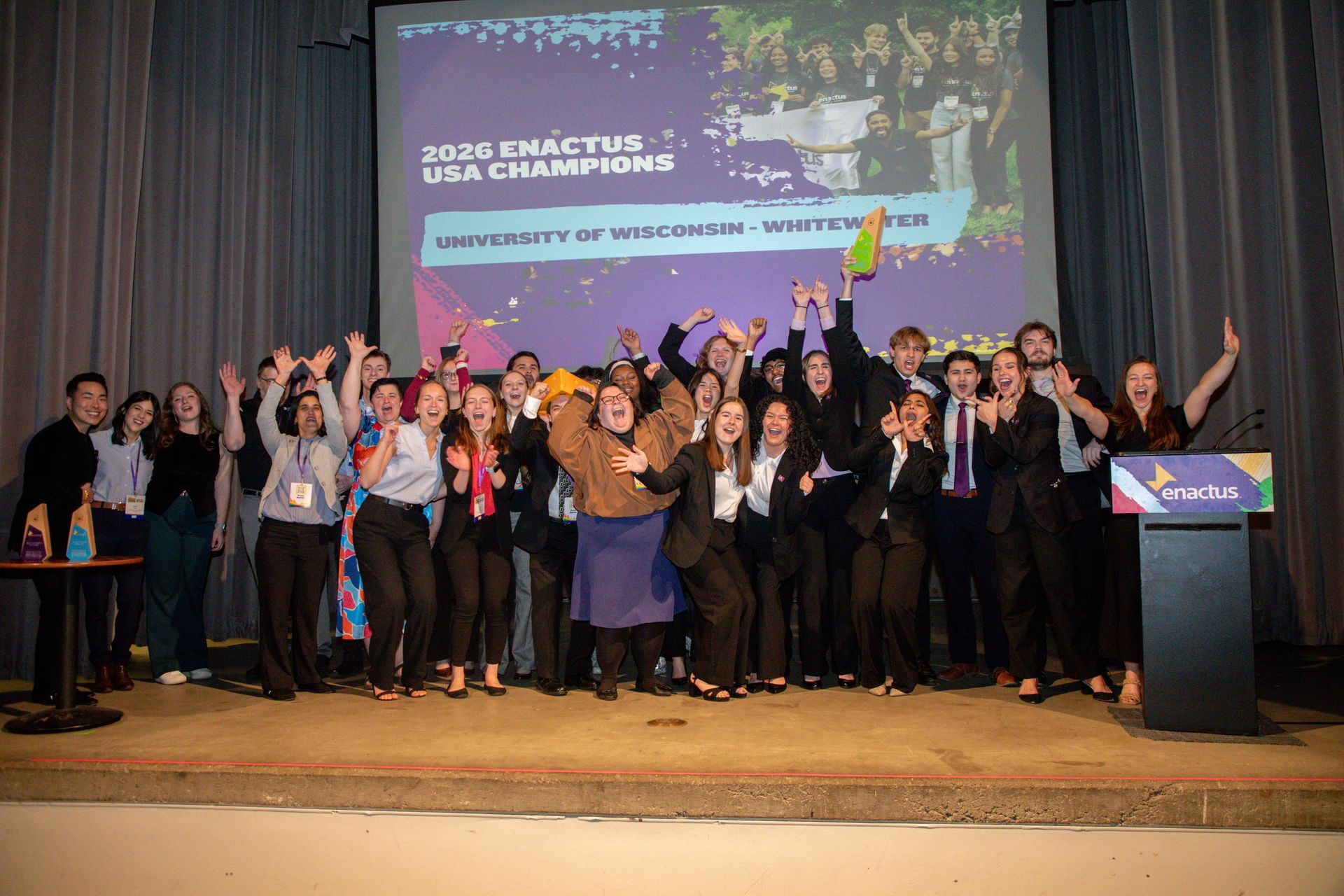
A conversation with Mikena Manspeaker, Acting Country Leader for Enactus United States

February 7, 2026
Money stress is one of the most common (and least talked about!) sources of anxiety for college students. It shows up quietly: a tight feeling when you check your bank account, avoiding emails about tuition or fees, stress when friends suggest plans you can’t afford, or guilt over spending even small amounts. If this sounds familiar, you are not alone! This winter, as we continue moving through the emotional arc of fear → reflection → clarity , financial wellbeing invites an honest question: What am I afraid of when it comes to money?  Because beneath budgeting apps and bank balances, money is deeply emotional.
January 24, 2026
Most students plan their semester around one thing: deadlines. Assignments. Exam dates. Work shifts. Lab schedules. Club meetings. Everything gets built around what has to happen. But what if you designed your semester around when you function best , not just when things are due? This is the heart of wellbeing-centered planning: recognizing that your energy is not the same at every hour of every day, and that working with your natural rhythms leads to better performance, better mood, and less burnout. This winter’s theme of r est, evaluation, and courage encourages you to pause, look inward, and ask: What do I need to thrive this semester? Not just to get through it, but to feel steady, capable, and clear.  Designing your semester around your energy peaks is one of the smartest ways to begin that shift!
January 17, 2026
When you think about fear, you might picture danger, stress, or something you want to avoid. But what if fear isn’t the enemy? What if fear is information that’s pointing you toward something meaningful? This winter at the Lifelong Wellbeing Foundation, we’re exploring the emotional arc of fear → reflection → clarity . Fear often signals the exact place where growth wants to happen. Instead of treating fear as a stop sign, we can begin to treat it as a compass.
January 3, 2026
The start of a new year always feels full of possibility. For college students especially, the beginning of January offers a clean slate before the semester ramps up. This is the in-between moment where you can breathe, reflect, and decide how you want to show up in the months ahead. At the Lifelong Wellbeing Foundation, we believe this pause is essential. Because a year of wellbeing doesn’t begin with resolutions, hustle, or pressure. It begins with awareness. This winter, our seasonal focus is rest, evaluation, and courage . Often our guiding emotion as we dive into a new semester is fear —not in the sense of danger, but in the sense of that subtle internal resistance that rises whenever we stand at the edge of something important. This is your invitation to acknowledge and harness that emotion. Fear often shows up when we’re about to grow. When we pause long enough to ask, “What am I actually afraid of here?” we often discover exactly where clarity is waiting.
December 30, 2025
What if you approached your college years not just as “get through it,” but as a designed life adventure? With the eight dimensions of wellbeing as your compass, you can build a “360-degree Wellbeing Plan” that guides the rest of your college journey. Here’s how… Step 1: Understand the Eight Dimensions Emotional – How you feel and how well you manage your emotions. Occupational – Your learning, work, growth in roles you value. Environmental – Your physical surroundings, campus, dorm, home, and nature. Physical – Movement, health, nutrition, rest. Mental – Cognitive stimulation, learning, mindfulness, curiosity. Social – Relationships, community, belonging. Financial – Money habits, budgeting, future financial health. Spiritual – Purpose, meaning, values, inner life. Step 2: Create Your 360-degree Wellbeing Plan Draw a large circle on paper (or digitally). Divide it into eight equal slices—one for each dimension. Label each slice with a dimension name. In each slice, write: One big dream you have for that dimension (for the rest of college). One small action you’ll commit to this semester to move toward that dream. Example: Physical: Big dream → “Complete a semester of intramural soccer and feel energetic.” Small action → “Attend one rec-center group fitness class each week.” Financial: Big dream → “Graduate with less than $5K in credit-card debt.” Small action → “Set aside $50/month and track spending with an app.” (And so on for each dimension.) Step 3: Review & Adjust At the end of each semester: Check your wheel: What progress did you make? What stalled? Adjust: Maybe your dream changed, maybe your action needs tweaking for the next semester. Use this as your compass rather than just reacting to whatever comes. Why This Works Holistic: Recognizes you’re not just “a student,” you’re a whole person across dimensions. Intentional : Choosing dreams rather than letting life choose them for you. Flexible : As you grow, your wheel evolves. Aligned : Builds your college years into a meaningful trajectory and not just semesters that blur together.  Your college years are a unique season and you don’t have to drift through them. With a plan for the new year that’s built around the eight dimensions of wellbeing, you can design your path, align your actions with your highest aspirations, and make the most of this chapter. Grab a poster-board, some colored pens, and craft your 360-degree plan this week. Let your dreams guide your next move.
December 23, 2025
How a 24-Year-Old Innovator Is Reimagining the Future of Mental Health Tools
December 16, 2025
More Health. More Life. More You.
December 9, 2025
1. Nutrition & Food as Medicine
December 2, 2025
Colleges and universities have always been more than classrooms. The entire campus becomes an ecosystem where students learn, grow, and discover who they are. But in recent years, higher education has faced a growing challenge: students are arriving on campus with more complex needs and higher stress levels than ever before. Conversations around wellness and wellbeing are essential. Wellness vs. Wellbeing: Why the Distinction Matters You’ve probably heard both terms used interchangeably, but they represent different, though connected, aspects of student health. Wellness is about the daily habits that maintain physical and emotional health like sleep, nutrition, exercise, and stress management. It’s the realm of fitness centers, mindfulness exercises, and campus health initiatives. Wellbeing , on the other hand, looks at the whole picture: not just what students do, but how they feel, function, and connect. It’s the realm of belonging, purpose, and the environment that supports (or hinders) a student’s ability to thrive. When wellbeing is strong, students show up to class more engaged, persist through challenges, and build the resilience to navigate college and beyond.
Show More